


Introduction
In the quest for enhanced focus, deeper relaxation, and improved sleep, many individuals are exploring alternative methods to optimize their mental and physical states. Among these, binaural beats have emerged as a fascinating auditory phenomenon with a growing body of anecdotal evidence and scientific inquiry. This blog post delves into what binaural beats are, how they work, their potential benefits, and what current research suggests about their efficacy.

What Are Binaural Beats?
Binaural beats are an auditory illusion perceived by the brain when two pure tones of slightly different frequencies are presented separately to each ear. For instance, if a frequency of 200 Hz is played into the left ear and 210 Hz into the right ear, the brain perceives a third, illusory tone with a frequency of 10 Hz. This perceived frequency, known as the binaural beat, is not an actual sound but rather a neurological response within the brain itself [1].
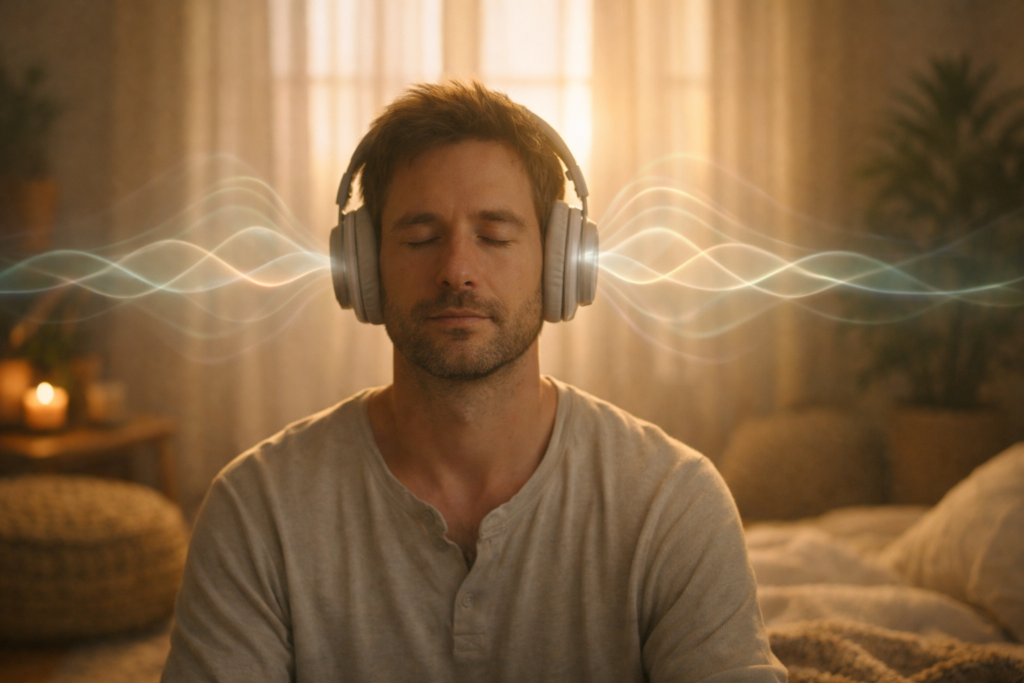
This phenomenon requires the use of stereo headphones, as the distinct frequencies must be delivered independently to each ear for the brain to create the binaural beat. The brain then attempts to synchronize its own electrical activity with the frequency of this perceived beat, a process known as brainwave entrainment.
How Do Binaural Beats Work? The Science of Brainwave Entrainment
The human brain produces electrical impulses that create brainwaves, which are associated with different states of consciousness. These brainwaves are categorized by their frequency, measured in Hertz (Hz):
| Brainwave Pattern | Frequency Range (Hz) | Associated States/Benefits |
|---|---|---|
| Delta | 0.5–4 Hz | Deep, dreamless sleep, restorative rest [1] |
| Theta | 4–7 Hz | Meditation, creativity, REM sleep, deep relaxation [1] |
| Alpha | 7–13 Hz | Relaxation, focus, positive thinking, decreased anxiety [1] |
| Beta | 13–30 Hz | Concentration, alertness, problem-solving, improved memory [1] |
| Gamma | 30–50 Hz | High-level cognitive processing, arousal, peak awareness [1] |
When listening to binaural beats, the brain’s electrical activity is thought to align with the frequency of the binaural beat. For example, listening to binaural beats in the alpha range (7-13 Hz) may encourage the brain to produce more alpha waves, leading to a state of relaxed alertness. This entrainment is believed to be the mechanism through which binaural beats exert their effects on mood, cognition, and physiological states.
Potential Benefits of Binaural Beats
Proponents and some studies suggest that regular exposure to binaural beats can offer a range of benefits, including:
- Reduced Stress and Anxiety: Binaural beats, particularly in the alpha and theta ranges, are often used to promote relaxation and alleviate symptoms of stress and anxiety [1]. Some research indicates a decrease in preoperative anxiety after listening to delta wave binaural beats [2].
- Improved Focus and Concentration: Beta wave binaural beats (13-30 Hz) are associated with enhanced concentration, alertness, and problem-solving abilities. They may also contribute to improved working memory [1].
- Enhanced Meditation and Mindfulness: Theta wave binaural beats (4-7 Hz) can facilitate deeper meditative states and promote creativity [1].
- Better Sleep Quality: Delta wave binaural beats (0.5-4 Hz) are linked to deep, dreamless sleep and can support more restorative rest [1].
- Mood Enhancement: Some individuals report an improvement in overall mood and emotional balance with consistent use.
Scientific Evidence and Considerations
While the concept of binaural beats is compelling, the scientific community’s understanding of their efficacy is still evolving. Many studies have explored their potential, yielding mixed results:
- A 2019 review of 22 studies found a significant link between prolonged exposure to binaural beats and reduced anxiety [3].
- A 2018 study suggested that listening to binaural beats for a recommended period can affect a person’s subsequent behavior and sleep cycles [1].
- Conversely, a 2017 study using EEG monitoring found that binaural beat therapy did not significantly affect brain activity or emotional stimulation, suggesting that observed benefits might be subjective or placebo-related [1].
- It’s important to note that binaural beat therapy is not part of standard medical care and is considered semi-experimental. It should not replace traditional treatments for stress, anxiety, or other conditions [1].
How to Incorporate Binaural Beats into Your Routine
If you’re interested in exploring binaural beats, here are some general guidelines:
- Use Stereo Headphones: This is crucial for the brain to perceive the distinct frequencies in each ear.
- Choose Your Frequency: Select a binaural beat frequency that aligns with your desired outcome (e.g., delta for sleep, alpha for relaxation, beta for focus).
- Find a Quiet Space: Minimize external distractions to maximize the effectiveness of the auditory experience.
- Consistency is Key: Many practitioners suggest listening for 15-30 minutes daily to experience potential benefits.
- Safety First: Avoid using binaural beats while driving or operating heavy machinery, as they can induce states of relaxation or drowsiness.
Conclusion
Binaural beats offer an intriguing avenue for those seeking to influence their mental states and enhance well-being through sound. While research continues to uncover the full extent of their effects, the growing interest and anecdotal reports suggest a promising potential for relaxation, focus, and improved sleep. As with any complementary therapy, it’s advisable to approach binaural beats with an open mind and consult with a healthcare professional if you have underlying health concerns.
References
[1] Medical News Today. (n.d.). Binaural beats therapy: Benefits and how they work. Retrieved from https://www.medicalnewstoday.com/articles/320019 [2] Medical News Today. (n.d.). Binaural beats therapy: Benefits and how they work (referencing a 2005 study). Retrieved from https://www.medicalnewstoday.com/articles/320019 [3] Medical News Today. (n.d.). Binaural beats therapy: Benefits and how they work (referencing a 2019 review). Retrieved from https://www.medicalnewstoday.com/articles/320019