

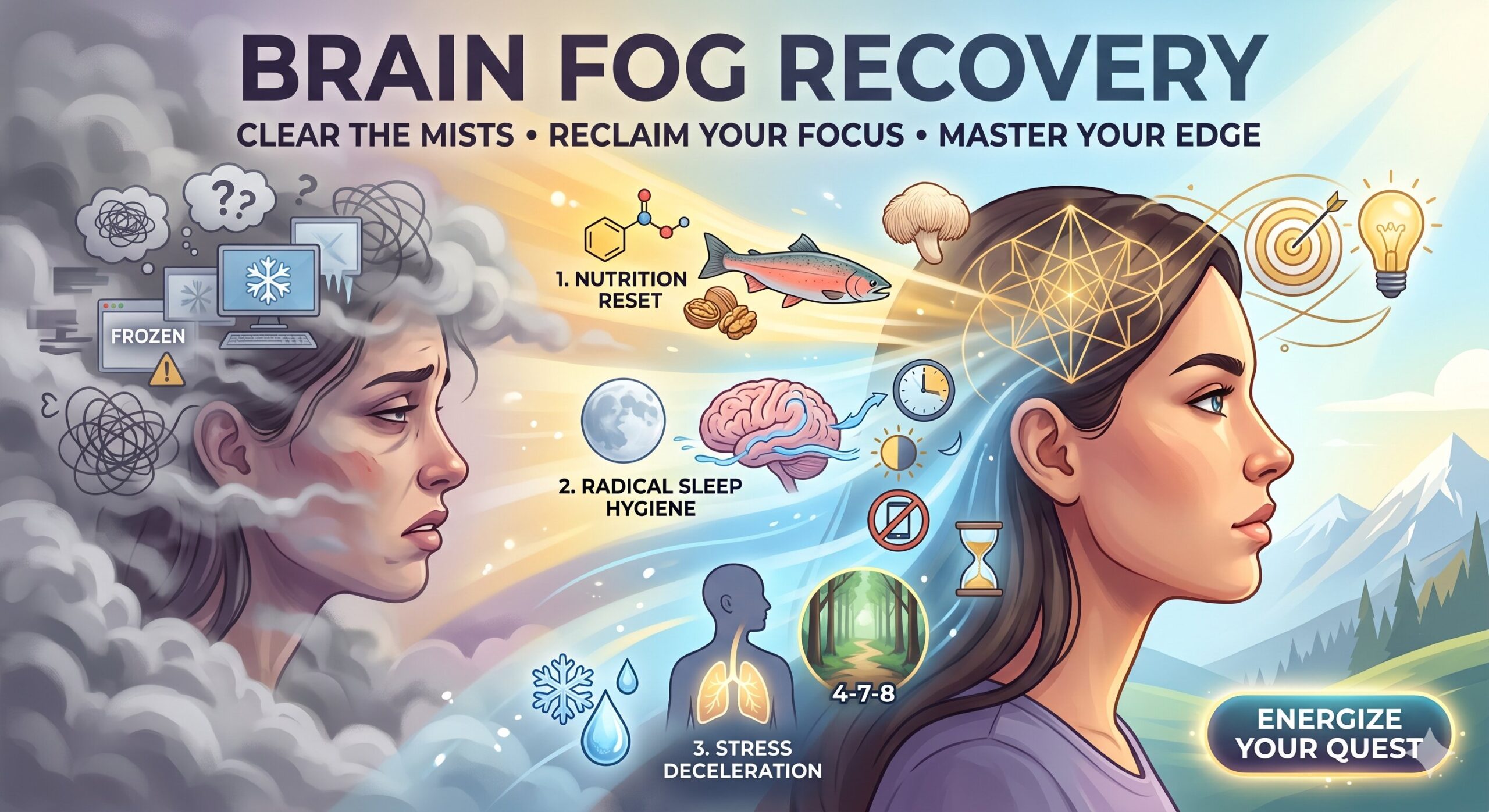
Ever walked into a room and realized you have absolutely no idea why you’re there? Or perhaps you’ve spent twenty minutes staring at a blinking cursor, waiting for a sentence—any sentence—to form in your mind.
It’s frustrating. It’s isolating. And frankly, it’s exhausting.
If you feel like you’re wading through mental molasses, you aren’t alone. Brain fog recovery is one of the most requested health protocols today, primarily because we’re living in an era of cognitive overload. I’ve been there—that “spaced-out” feeling where your brain feels like a browser with fifty tabs open, and half of them are frozen.
The good news? You aren’t “losing it.” Brain fog is a signal, not a permanent state. This guide is your roadmap to brain fog recovery, moving from cognitive sludge to clinical clarity.
Why Your Current Strategy for Brain Fog Recovery Isn’t Working
Most people try to “caffeine” their way out of a mental slump. They reach for a third espresso or a neon-colored energy drink, hoping to shock their neurons back to life.
Here’s the problem: if your brain fog is caused by systemic inflammation or high cortisol, more caffeine is like whipping a tired horse. It might move faster for a second, but eventually, it’s going to collapse.
To master brain fog recovery, we have to stop looking at the brain in isolation. Your gray matter is downstream from your gut, your sleep, and your stress levels. If those are a mess, your focus will be too.
The Inflammation Connection
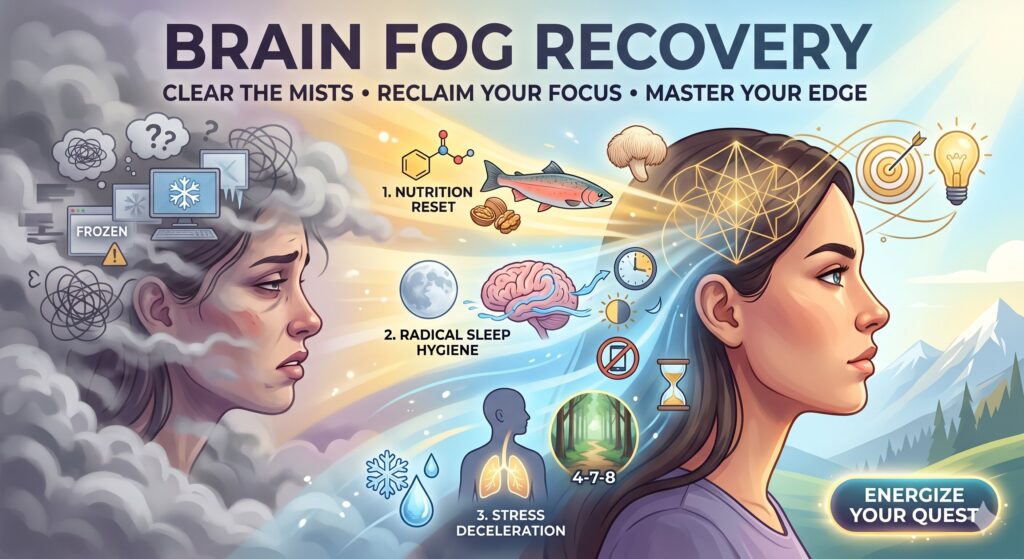
Research suggests that “fog” is often just a polite word for low-grade neuroinflammation. When your body is busy fighting off perceived threats—whether from poor diet, chronic stress, or lack of sleep—it diverts energy away from high-level cognitive functions. [External Link: Study on Cytokines and Cognitive Function]
The Three Pillars of Brain Fog Recovery
If you want to clear the clouds, you need a multi-pronged approach. We’re going to focus on the “big wins” that move the needle the fastest.
1. The Nutrition Reset
What you eat is literally the fuel for your neurotransmitters. If you’re fueling with ultra-processed sugars, you’re going to experience the dreaded “crash and burn.”
- Prioritize Omega-3s: Think wild-caught salmon, walnuts, and chia seeds. These are the building blocks of brain cell membranes.
- Hydrate with Electrolytes: Sometimes “fog” is just plain old dehydration. Plain water is fine, but adding a pinch of sea salt or a magnesium drop can improve cellular hydration.
- Eliminate Trigger Foods: For many, gluten or dairy can cause a systemic inflammatory response that manifests as mental sluggishness.
2. Radical Sleep Hygiene
You cannot skip sleep and expect a high-functioning brain. During deep sleep, your brain’s glymphatic system “washes” away metabolic waste. Without it, the trash piles up.
- No screens 60 minutes before bed: The blue light mimics the sun and crushes your melatonin production.
- Keep it cool: Your body needs a drop in core temperature to initiate deep sleep cycles.
- Consistency is king: Going to bed and waking up at the same time resets your circadian rhythm, a vital step in brain fog recovery.
3. Stress Deceleration
High cortisol levels are neurotoxic to the hippocampus—the part of your brain responsible for memory and learning. [Internal Link: How Cortisol Impacts Memory]
- The 4-7-8 Breath: Inhale for 4, hold for 7, exhale for 8. It’s a manual override for your nervous system.
- Nature Therapy: Even a 10-minute walk outside can lower your sympathetic nervous system activity significantly.
Advanced Protocols for Lasting Clarity
Once you’ve nailed the basics, you can start looking at more targeted interventions. This is where brain fog recovery goes from “feeling better” to “feeling superhuman.”
- Intermittent Fasting: Giving your digestive system a break can trigger autophagy—a cellular “cleanup” process that can sharpen focus.
- Cold Exposure: A 30-second cold blast at the end of your shower releases a surge of norepinephrine, instantly clearing mental cobwebs.
- Targeted Supplementation: Magnesium L-threonate and Lion’s Mane mushroom are heavy hitters in the cognitive health world.
Final Thoughts: Reclaim Your Edge
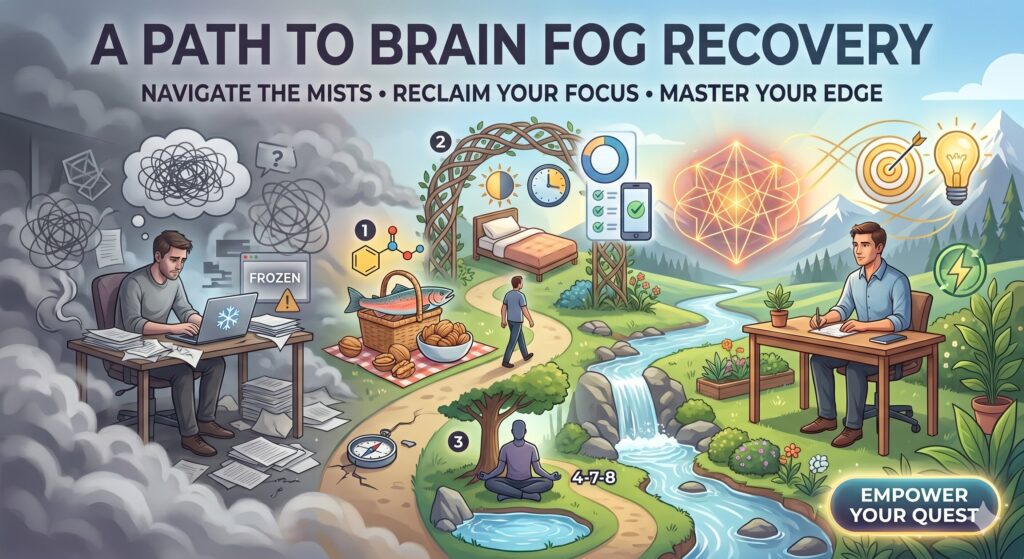
Brain fog recovery isn’t an overnight event; it’s a series of small, intentional choices. Start by picking one pillar—maybe it’s the sleep hygiene or the hydration—and master it for a week. You’ll be surprised how quickly the “mists” begin to lift when you stop fighting your biology and start supporting it.
If you’re tired of feeling like a passenger in your own mind and you’re ready to ignite your natural vitality, I have something for you.
Take the next step in your journey and discover how to truly fuel your fire here: Energize Your Quest
FAQ: Clearing Up the Confusion
What is the fastest way to get rid of brain fog? The fastest “quick fix” is usually a combination of intense hydration (with electrolytes), a 10-minute walk in sunlight, and a high-protein snack. However, long-term recovery requires addressing sleep and inflammation.
Can supplements really help with brain fog recovery? Yes, but they aren’t a “magic pill.” Supplements like Vitamin B12, Vitamin D, and Omega-3s can bridge nutritional gaps, while adaptogens like Ashwagandha help manage the stress that causes fog in the first place.
Is brain fog a symptom of burnout? Absolutely. It is often the first “canary in the coal mine.” When your brain can no longer process information efficiently, it’s a sign that your nervous system is overtaxed and needs a dedicated recovery period.