

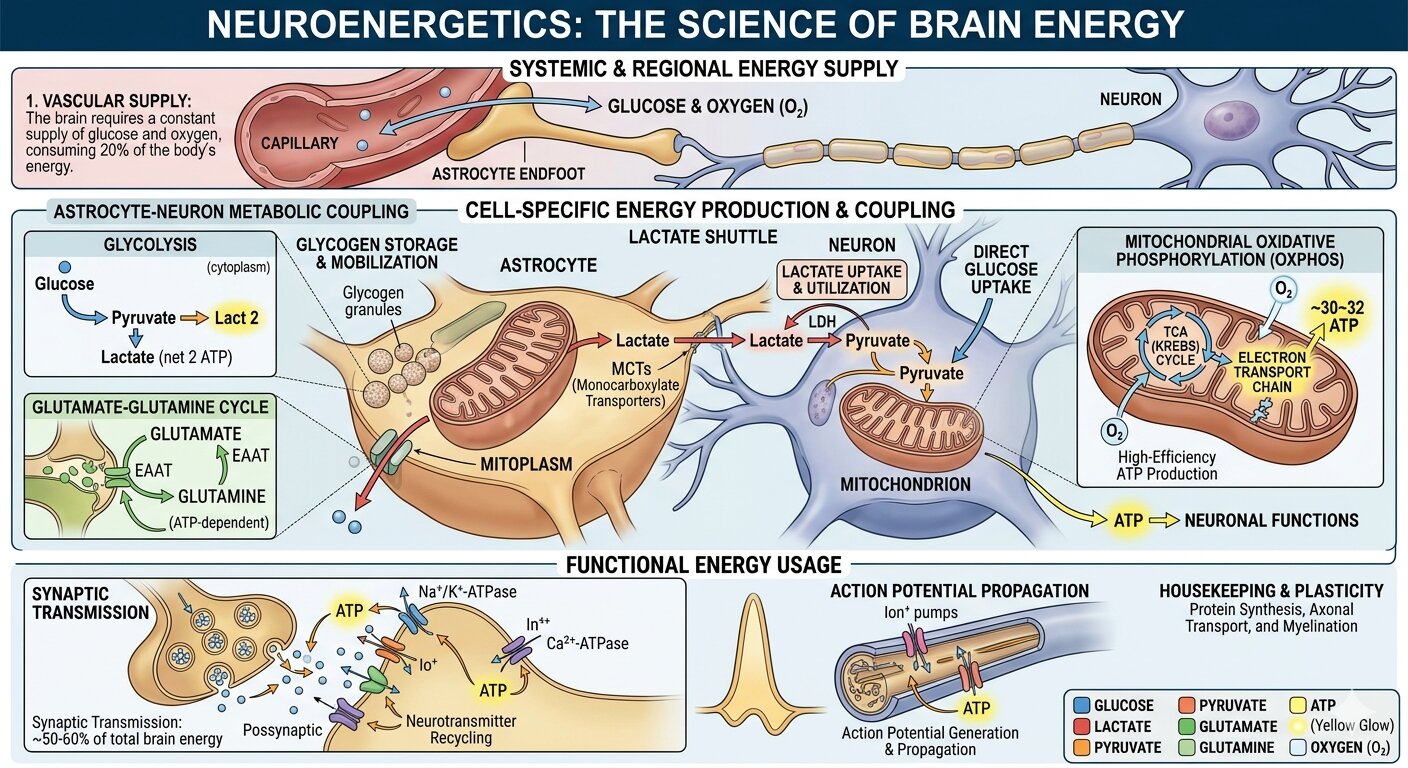
You’ve been there. It’s 2:00 PM, and your brain feels like it’s trying to run a marathon through a vat of cold syrup. You aren’t lazy, and you don’t necessarily need more caffeine. You’re likely experiencing a localized power failure in your skull. To understand why your focus just evaporated, we have to look at neuroenergetics—the complex study of how your brain cells produce, distribute, and consume energy.
The human brain is a metabolic gold digger. While it only accounts for about 2% of your total body weight, it greedily consumes a staggering 20% of your daily energy budget. If that energy delivery system falters by even a fraction, your productivity doesn’t just dip—it craters.
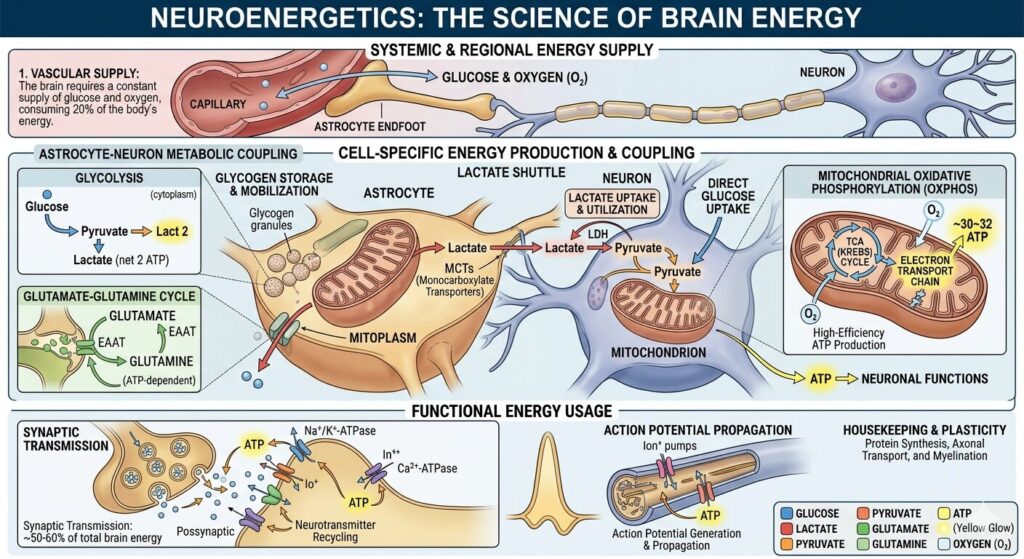
What is Neuroenergetics? (And Why You Should Care)
Most people view “focus” as a personality trait, but neuroenergetics proves it’s actually a biological output. At its core, this field examines the high-stakes relationship between cerebral blood flow, neurovascular coupling, and the microscopic power plants inside your cells.
Your brain doesn’t have a “storage tank” for fuel. It operates on a just-in-time delivery system. To keep the lights on, your neurons rely on a constant stream of glucose and oxygen to facilitate:
- ATP Synthesis: This is the literal cellular currency that powers neurotransmission and keeps your neurons “excitable” enough to fire.
- Calcium Signaling: Mitochondria regulate calcium levels, which is the secret sauce behind neural signaling and your brain’s ability to learn new things (plasticity).
- Structural Maintenance: Energy is required just to maintain the shape and connectivity of your neurons.
If this supply chain breaks, you don’t just feel “tired.” Your neurons literally lose the ability to communicate efficiently.
Why Neuroenergetics is the Key to Beating Brain Aging
We’ve all seen the flashy headlines about “brain hacks,” but the real battle for long-term clarity is fought at the mitochondrial level. When neuroenergetics fail, the consequences aren’t just limited to a bad afternoon at the office.
As we age, our brain’s mitochondrial function naturally begins to decline. When these power plants become dysfunctional, they don’t just stop producing energy; they start leaking “exhaust” in the form of Reactive Oxygen Species (ROS). This leads to a vicious cycle of:
- Oxidative Stress: This “exhaust” damages the very cells it’s supposed to power.
- Neuroinflammation: Your brain’s immune system triggers an inflammatory response that further clouds your cognitive function.
- Disease Progression: Mitochondrial failure is now recognized as a central pathology in both Parkinson’s and Alzheimer’s Disease.
[Insert External Link: Recent study on the role of ROS in cognitive decline]
The “Silent” Killers of Brain Energy
You might be sabotaging your neural power grid without even realizing it. Because the brain is so energy-hungry, it is the first organ to suffer when your body’s overall energy production is compromised.
Researchers now view mitochondrial dysfunction as a prime target for therapeutic interventions. If you can protect your mitochondria, you aren’t just boosting your productivity; you’re effectively “future-proofing” your neural stem cells and supporting neurogenesis—the birth of new neurons.
Final Thoughts: Bridging the Energy Gap
Optimizing your neuroenergetics isn’t about working harder; it’s about fueling smarter. You can use all the productivity planners in the world, but if your mitochondria are struggling to produce ATP, your brain will remain “offline”.
I’ve found that even the best diet sometimes isn’t enough to keep up with the high-octane demands of a modern career. You need a way to support your cellular “battery” so it can actually keep up with your ambitions. If you’re ready to stop the 3:00 PM crash and finally close the gap between your potential and your performance, you need to check out the protocol I use every day to keep my internal engine running hot: Wholesome Quests Energizer.
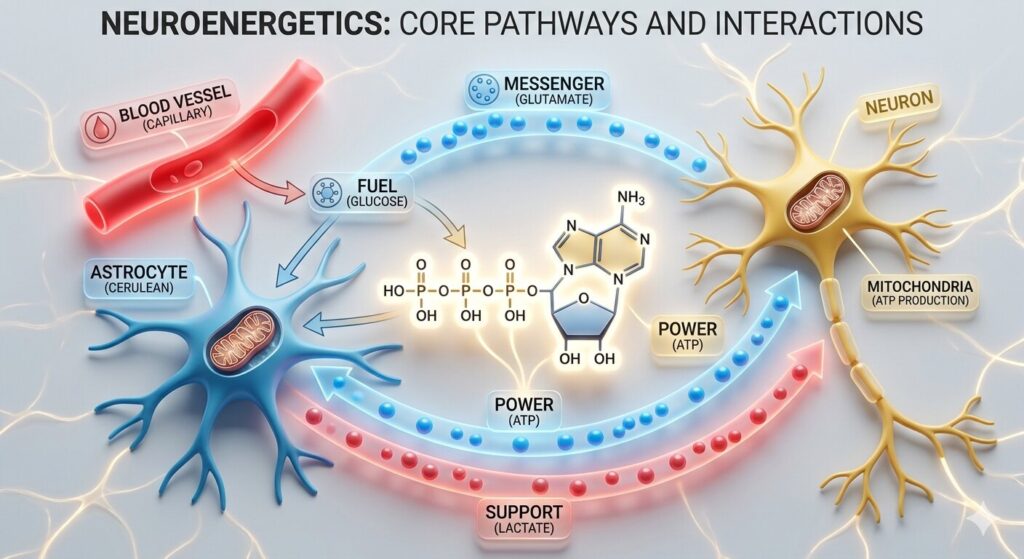
FAQ
What exactly is neuroenergetics?
It is the branch of science that studies how brain cells manage their massive energy budget, specifically focusing on how mitochondria produce energy to support neurotransmission and brain development.
Can mitochondrial health prevent memory loss?
While not a “cure-all,” healthy mitochondria are essential for calcium signaling and neuroplasticity. Dysfunction in these areas is a primary driver of oxidative stress and is heavily linked to neurodegenerative conditions like Alzheimer’s.
How do I know if my brain energy is low?
Common signs include chronic brain fog, an inability to focus on complex tasks, irritability (decision fatigue), and a reliance on stimulants just to feel “baseline”.