

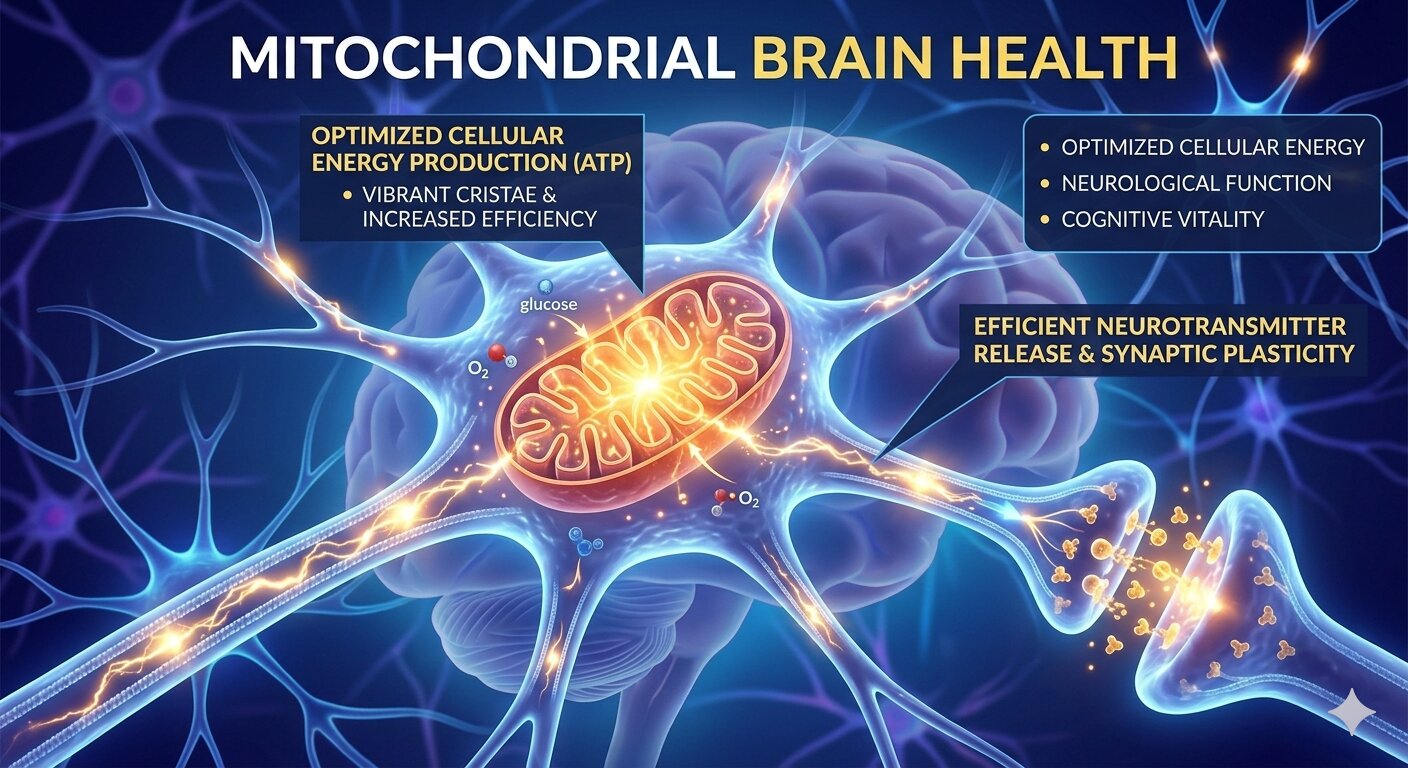
Your brain is a metabolic gold digger. It accounts for a measly 2% of your body weight, yet it greedily gobbles up 20% of your total daily energy. When you feel that midday slump or a “glitch” in your memory, it isn’t usually a lack of coffee; it’s a fuel delivery failure. To truly fix it, we have to talk about mitochondrial brain health. If your cellular power plants aren’t performing, your “expert-level” cognitive skills won’t either.
I’ve spent a decade looking for the “limitless pill,” and the truth is much more biological than pharmacological. We don’t need more stimulants; we need better-functioning mitochondria.
The Science of Neuroenergetics and Mitochondrial Brain Health
We often treat our brains like computers, but they are more like high-performance engines. The study of this energy management is called neuroenergetics, and it is entirely dependent on cerebral blood flow and efficient neurovascular coupling. At the center of this system sits the mitochondria.
Mitochondria are far more than just “powerhouses.” In your brain, they serve several critical roles:
- ATP Synthesis: They generate the chemical energy (ATP) required for neurotransmission and keeping your neurons “excitable”.
- Calcium Signaling: They act as regulators for cellular calcium, which is vital for the signaling and plasticity that allows you to learn new things.
- Brain Development: They are key regulators of neural stem cells and the creation of new neurons, a process called neurogenesis.
- Structural Integrity: They even influence the shape and structure—the morphology—of your neurons.
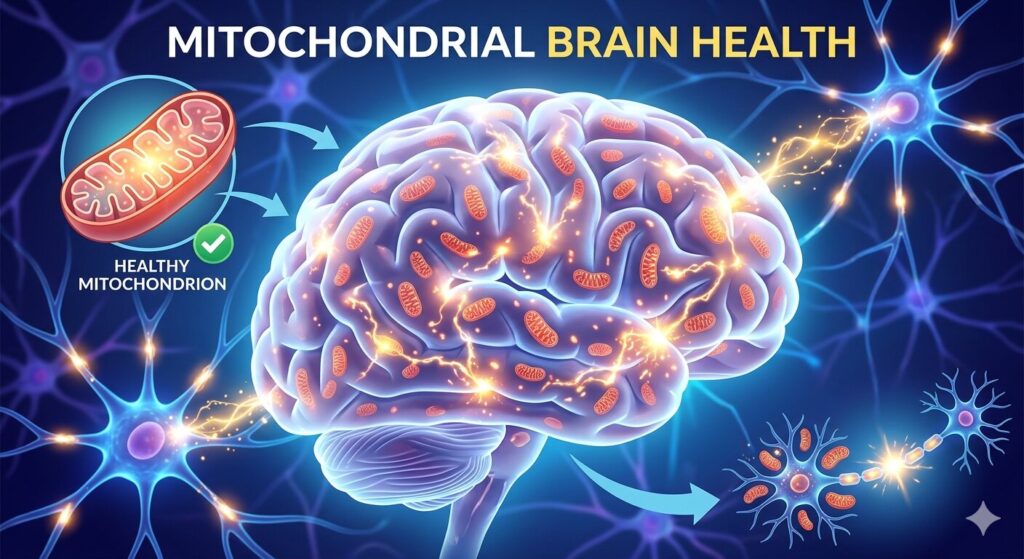
When mitochondrial brain health is optimal, your brain development and neural connectivity remain sharp and resilient.
What Happens When Mitochondrial Brain Health Fails?
When the energy supply can’t meet the demand, the system doesn’t just slow down—it starts to break. Because your brain is so energy-hungry, it is the first place you’ll notice mitochondrial energy production failing.
This decline isn’t just a “someday” problem; brain mitochondrial function naturally declines as we age. When these power plants fail, they don’t just stop producing energy; they start producing “exhaust” in the form of Reactive Oxygen Species (ROS).
This leads to a nasty cellular cascade:
- Oxidative Stress: Excessive ROS leads to oxidative damage throughout the brain.
- Neuroinflammation: Dysfunction triggers inflammatory responses that further cloud your thinking.
- Disease Progression: Mitochondrial failure is a central pathology in Parkinson’s Disease.
- Cognitive Decline: In Alzheimer’s Disease, the increased production of ROS resulting from mitochondrial decline is a major factor in the disease’s progression.
[Insert External Link: Study on mitochondrial dysfunction and neurodegenerative disease]
Fueling the Engine: Beyond the Brain
Understanding mitochondrial brain health gives us a massive advantage: we can stop guessing why we’re tired and start targeting the source. Because mitochondrial dysfunction is fundamental to so many disorders, researchers now see it as a prime target for treatments.
But you don’t have to wait for a pharmaceutical solution to start protecting your neural stem cells and energy production. While we can optimize our chemistry with nootropics and better sleep, you still need to address the physical “battery” that powers the whole machine.
If you feel like your mental engine is running hot but your body is still lagging, you need to bridge that energy gap. I’ve found that supporting my cellular stamina is the only way to keep my neuroenergetics in the green. To see the exact protocol I use to maintain peak vitality and keep my “internal power grid” online, head over to Wholesome Quests Energizer.
Final Thoughts
We spend a lot of time worrying about what we think, but not nearly enough time worrying about how we power those thoughts. By prioritizing your mitochondrial health, you aren’t just avoiding brain fog—you’re actively protecting yourself against the primary drivers of brain aging and neuroinflammation. Stop shouting at your brain to work harder and start giving its cells the fuel they need to thrive.
FAQ: Your Brain on Mitochondria
What is the main cause of poor mitochondrial brain health? While aging is a natural factor, chronic oxidative stress and neuroinflammation are the primary drivers of decline. Environmental toxins, poor diet, and lack of sleep all contribute to the “exhaust” (ROS) that damages these organelles.
Can I actually grow new brain cells through mitochondrial health? Yes. Mitochondria are key regulators of neural stem cells and the process of neurogenesis. By maintaining healthy mitochondria, you support your brain’s natural ability to develop and form new connections.
How are Alzheimer’s and Parkinson’s related to mitochondria? Mitochondrial dysfunction is a central pathological feature in both. In Parkinson’s, it is a common underlying pathology, while in Alzheimer’s, the oxidative stress from mitochondrial decline significantly contributes to the disease.
Does exercise help my brain’s mitochondria? Absolutely. Physical activity is one of the best ways to improve neurovascular coupling and cerebral blood flow, which are the support systems for mitochondrial activity in the brain.